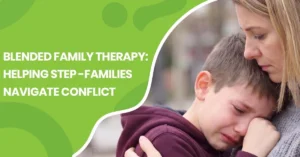
Blended Family Struggles: Why Step-Families Need Extra Support
Forming a blended family can bring genuine excitement and real hope, a chance to build something new with people you love. It can also be harder than anyone anticipated. Children who didn’t choose this arrangement. Adults who are figuring out their roles without a clear template. Relationships that need time no one has quite enough of. Love between the adults doesn’t automatically make everyone feel like a family. And when tension becomes a recurring pattern rather than an occasional rough patch, having some support can make a real difference. Family therapy for blended families isn’t about deciding who is right. It’s about helping the family understand what’s actually happening and finding ways to work through it together. Blending Two Families Is More Than Moving Into One Home When two families come together, they aren’t starting from scratch. Each person brings something with them: established routines, family traditions, ideas about how things are supposed to work, emotional histories, and relationships that existed before this family did. A child who has spent years in one household dynamic doesn’t reset when they move into a new one. A parent who has raised children a certain way doesn’t simply adopt a different approach because the family structure has changed. A stepparent entering an existing relationship between a parent and child is navigating something that has its own history, its own rhythms, and its own rules that weren’t written for them. The family may share a home before it feels like a shared family. That gap, between the practical reality of living together and the emotional experience of belonging together, is where most of the difficulty lives. Why Blended Families Can Struggle Even When Everyone Cares Many blended families have something important in common: everyone is trying. The challenges aren’t usually about a lack of effort or goodwill. They’re about the genuine complexity of what each person is navigating. Children May Feel Caught Between Families A child who loves their biological parent may worry that warming to a stepparent means betraying someone. Divided loyalties are real and common, not a sign that a child is being difficult, but a sign that they’re trying to sort out a situation that adults sometimes forget is genuinely complicated. Different rules between two households add another layer. What’s expected at one parent’s home may be completely different at the other’s, and children learn to navigate those differences, which takes energy and can create confusion about where they actually stand. Stepparents May Struggle to Find Their Role How much authority does a stepparent have? When is it appropriate to step in, and when is that overstepping? What happens when a child pushes back against their involvement despite genuine effort? Many stepparents describe feeling like outsiders, doing the practical work of parenting while not quite being accepted as a parent. That experience can be isolating, particularly when a partner doesn’t fully understand it. Biological Parents Can Feel Pulled in Two Directions A biological parent in a blended family is often trying to protect their child, support their partner, and manage the household, all at the same time. When their child resists the stepparent, or when their partner feels unsupported, the biological parent is often in the middle of both. Guilt about discipline is common. So is uncertainty about when to prioritize the child’s comfort versus the partner’s role. Partners May Disagree About Parenting Even two people who agree on most things can disagree significantly about how to raise children. Different backgrounds, different experiences of being parented, and different ideas about discipline, expectations, and responsibility can create real friction, not because either person is wrong, but because they’re working from different internal frameworks. The Stepparent–Stepchild Relationship Takes Time One of the most common sources of frustration in blended families is the expectation that warmth and trust will develop quickly. They usually don’t, and that isn’t anyone’s failure. Trust isn’t something that can be established by proximity or good intentions. It develops through repeated, consistent experiences over time. A child who has been through significant change isn’t necessarily going to immediately welcome a new adult figure, even one who is genuinely kind. A stepparent doesn’t have to immediately become a parent in the full sense of that word. They can start with something simpler, a respectful adult presence, someone who is consistent and kind and who doesn’t demand more emotional openness than the child is ready to give. Children often need time to sit with a new family structure before they can begin to feel comfortable in it. Adults who can hold that space, without taking resistance personally or pushing for a closeness the child isn’t ready for, tend to see better results over time than those who force the pace. What Helps Build the Relationship Consistency, showing up the same way over and over, without conditions. Respect, not requiring a particular level of warmth in return for basic courtesy. Patience, understanding that the timeline is the child’s, not the adult’s. Shared activities that don’t carry expectations. Clear limits that apply to everyone. Allowing the relationship to develop at its own pace. When Parenting Rules Become a Source of Conflict Household rules in blended families are frequently a flashpoint: discipline, screen time, chores, bedtimes, school expectations, responsibilities. What one parent has always done one way, the other may have done completely differently. An important distinction worth making: different isn’t automatically wrong. The goal isn’t to make every household rule identical between two parents who raised their children separately. It’s to establish enough consistency and clarity within this household that everyone, children and adults, knows what to expect. That requires conversation, compromise, and in many cases, explicit agreement about what the shared standards will be rather than assuming they’ll align naturally. When those conversations repeatedly become arguments, or when children are left to figure out inconsistent expectations on their own, the household environment becomes less stable, which affects everyone in it. When Loyalty Conflicts Affect the Family Children in blended families sometimes carry questions … Continue reading Blended Family Struggles: Why Step-Families Need Extra Support
